






88 Eldridge Street, 5th floor.
New York, NY, 10002
+1 (305) 323 3103
Tuesday to Saturday
11:00 am to 06:00 pm
Un pozo que mira al cielo
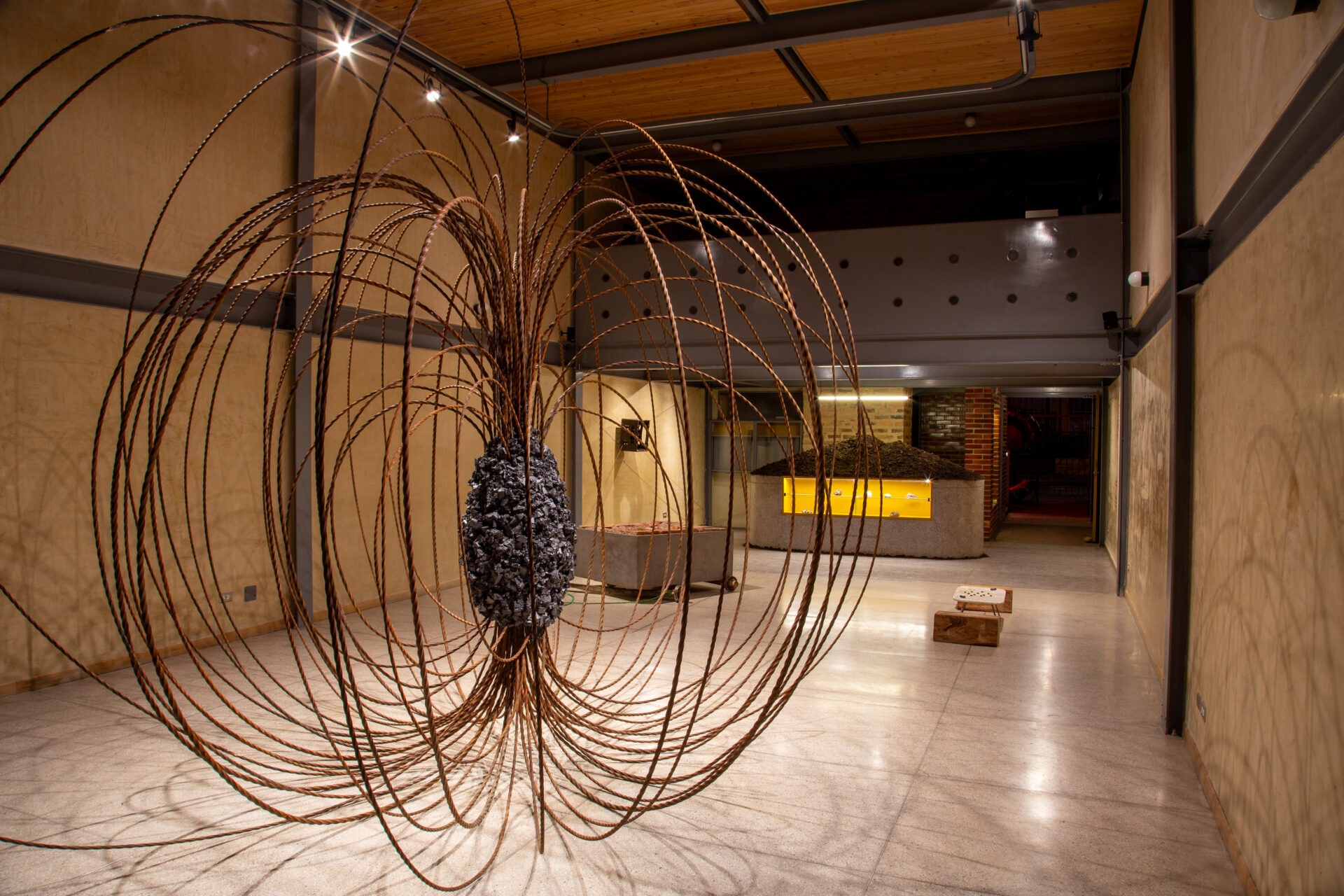
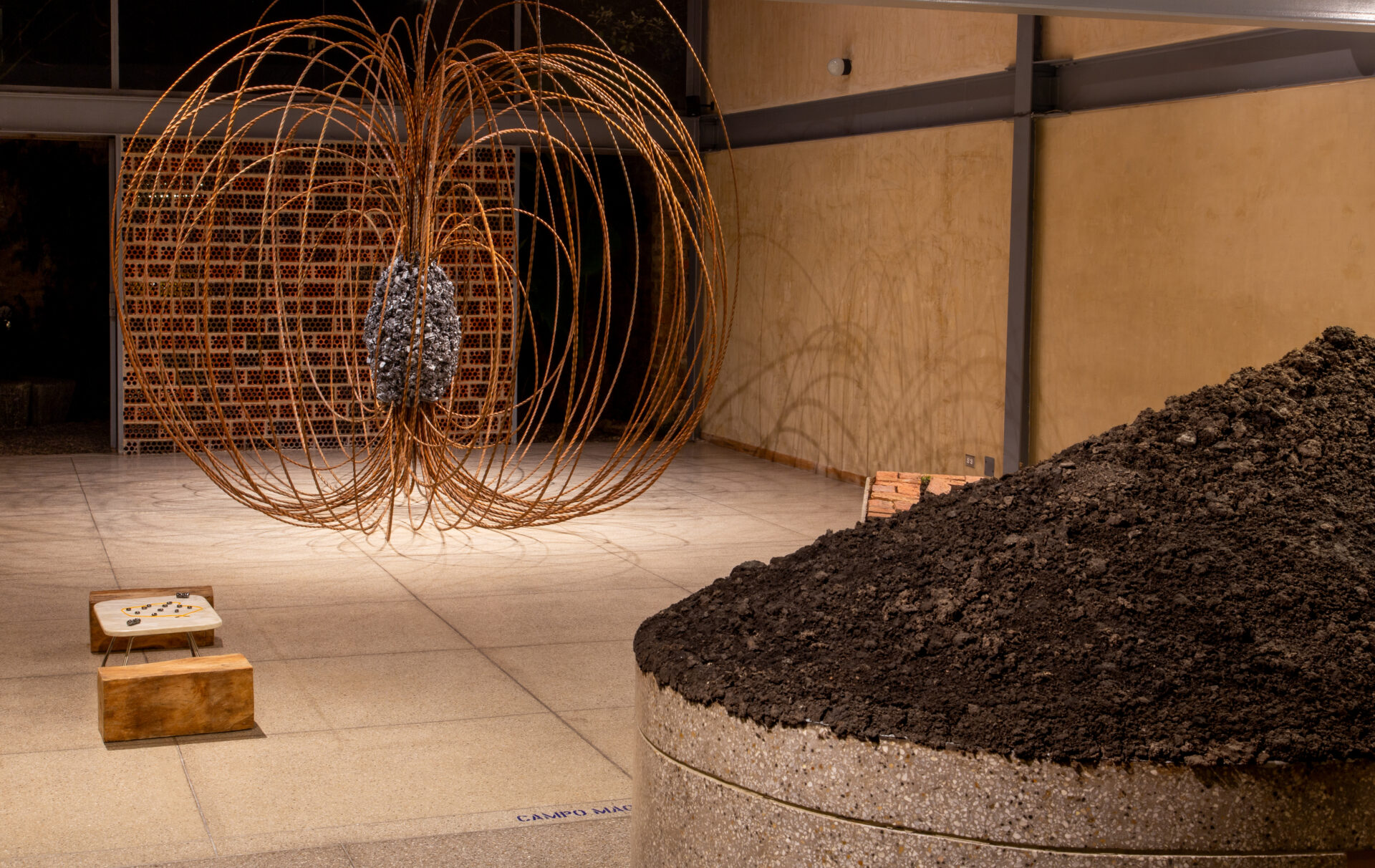
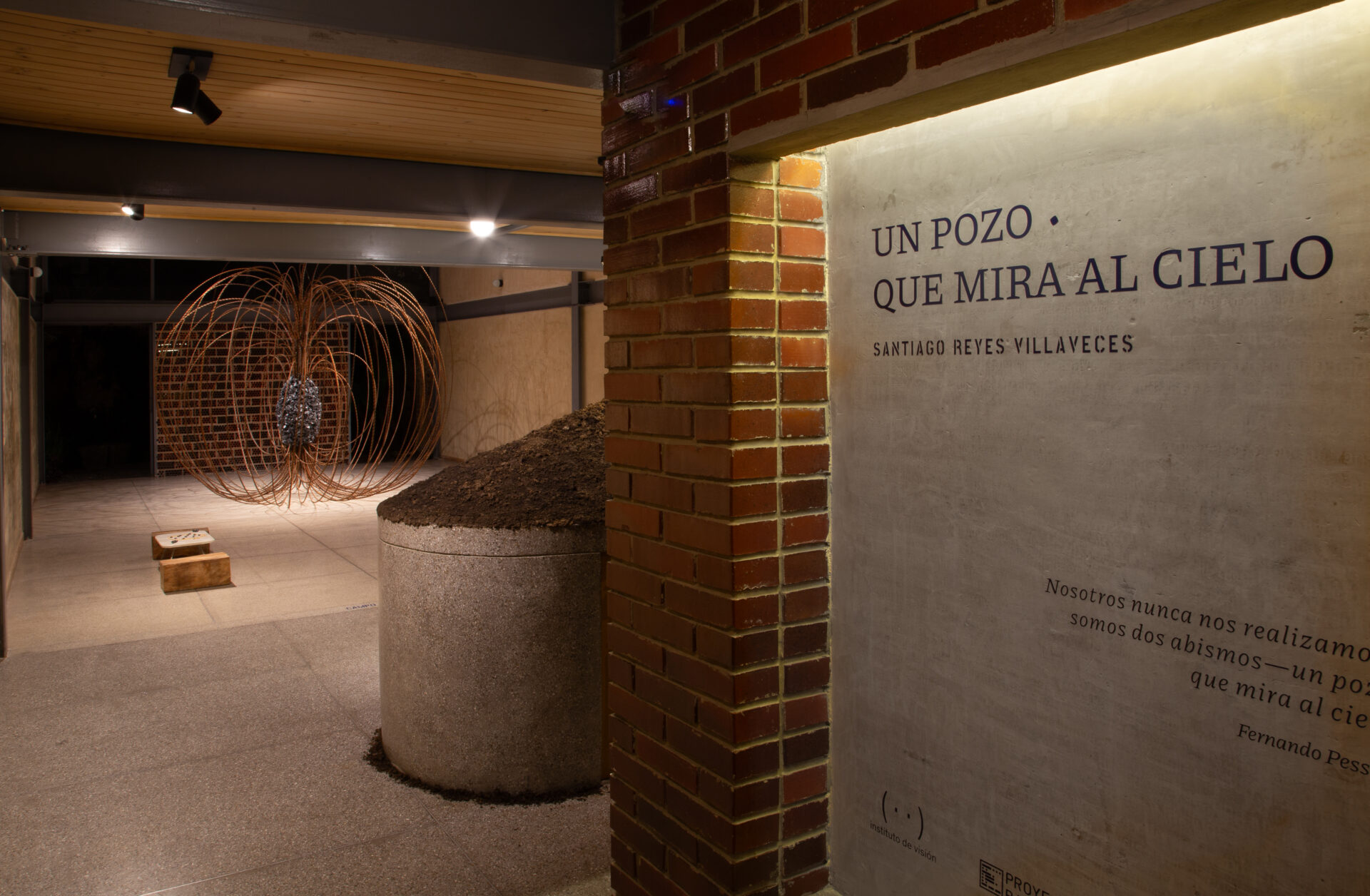
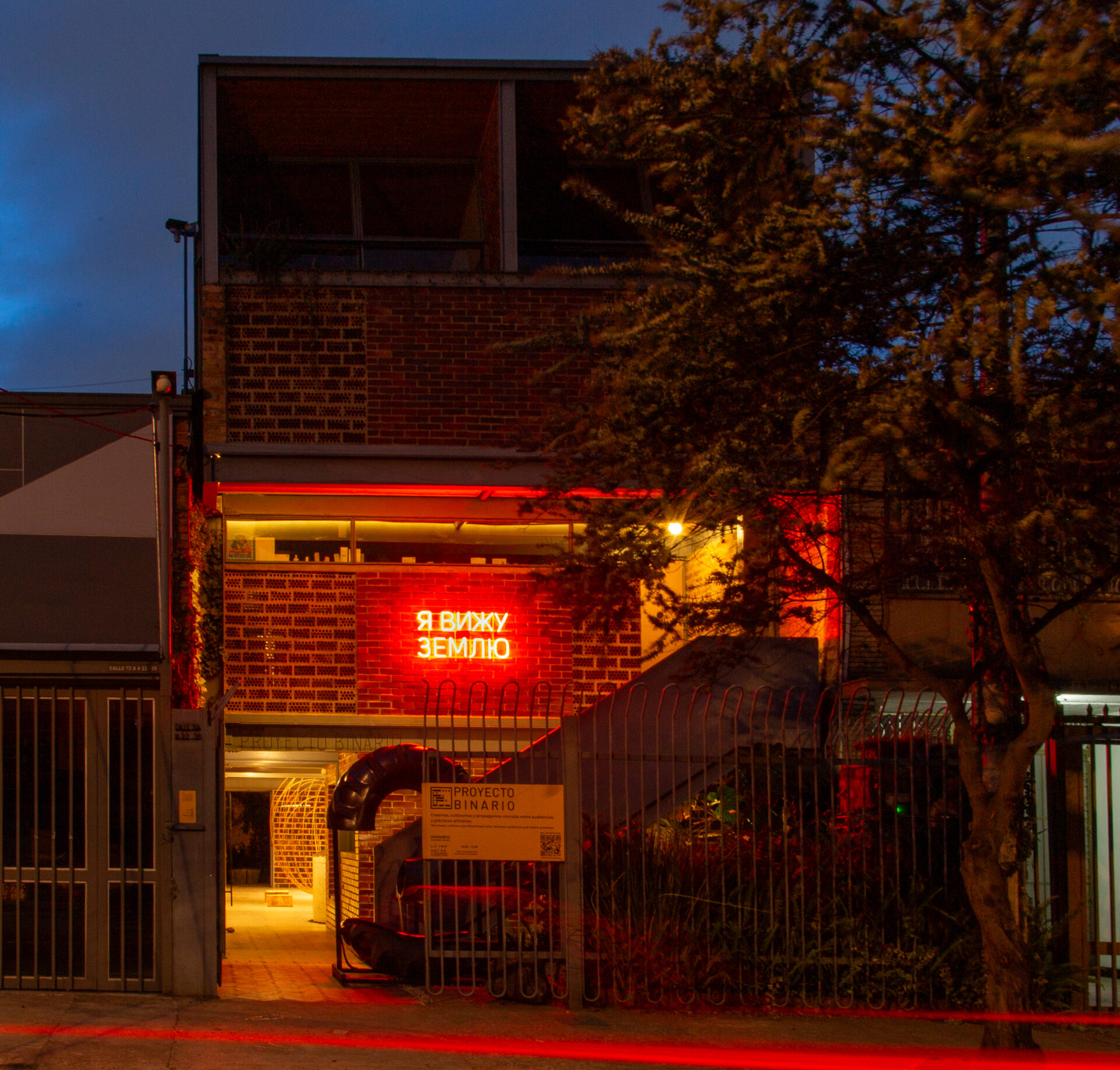
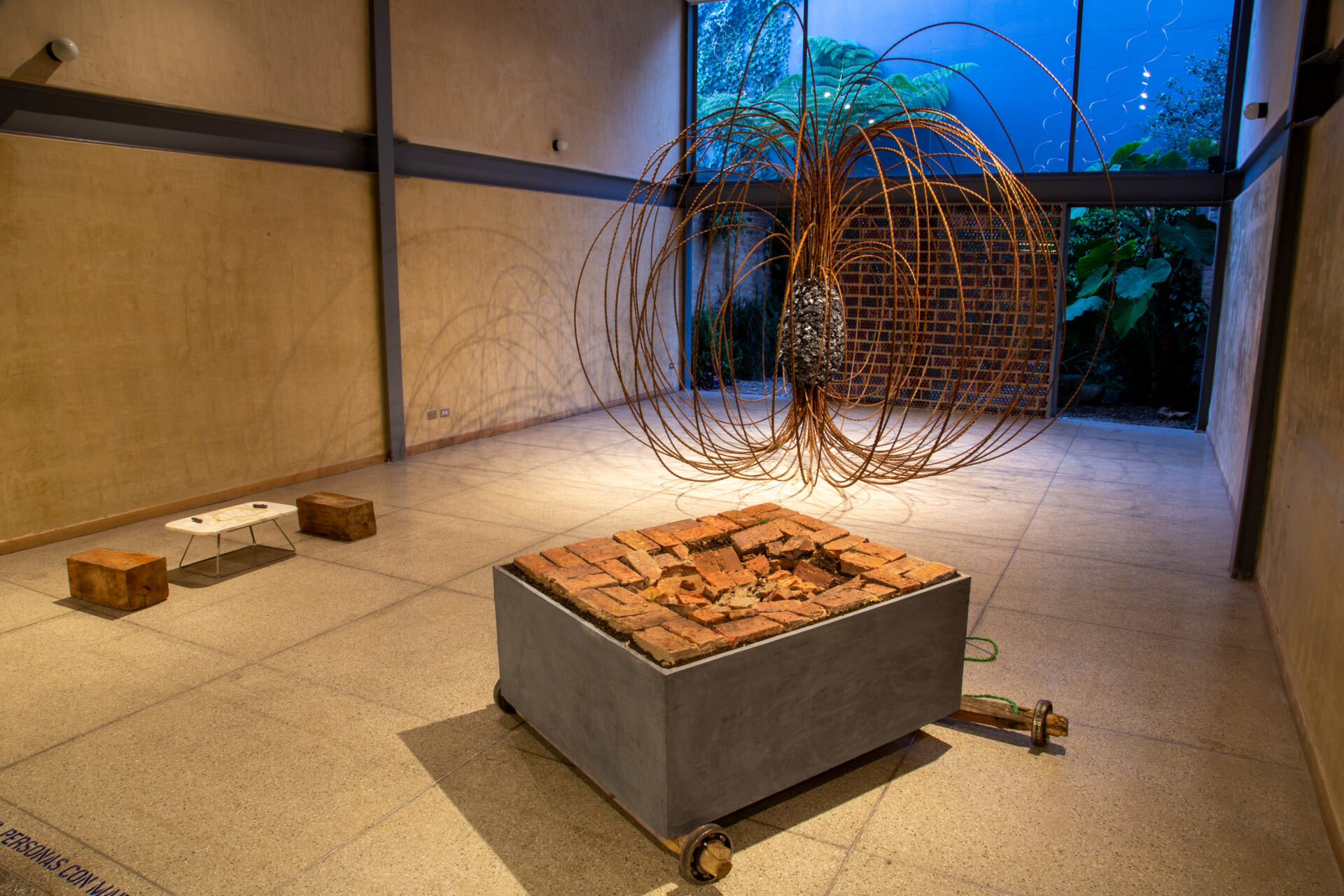
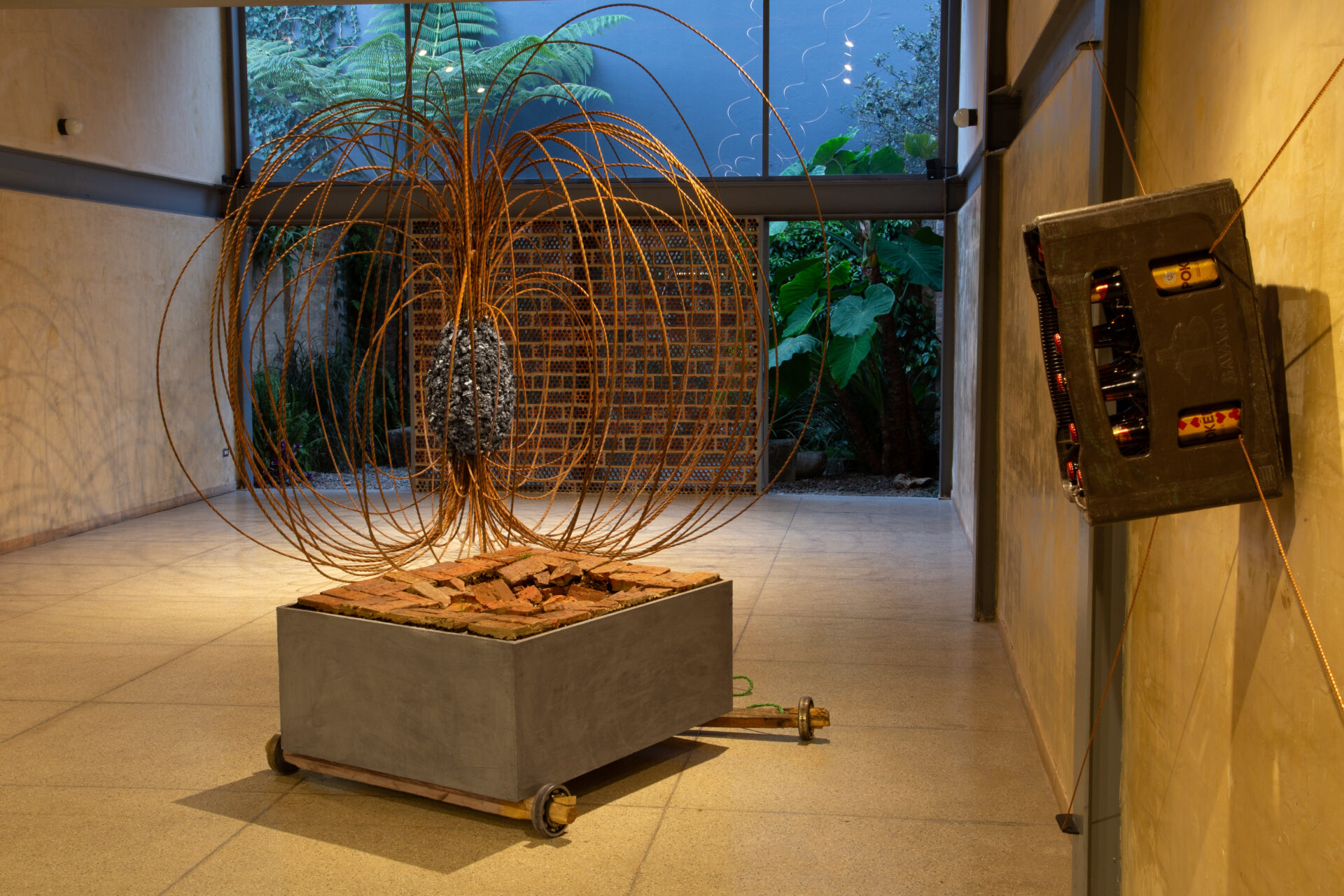
Un pozo que mira al cielo brings together works by Santiago Reyes Villaveces that connect space and the body with forces that do not appear directly as images: magnetism, the underground, and scales that exceed the human. Rather than representing these forces, the exhibition operates as a sensory apparatus that excavates, conducts, displaces, suspends, and illuminates. Science and sculpture intersect through concrete operations that reorganize matter, architecture, and the body. At this intersection, the exhibition intertwines the subterranean and the orbital within the body of those who move through it.
A magnetic mass functions as a core; around it, rods trace orbits, returns, and tensions. It is the anatomy of a field. An inscription warns that people with pacemakers should not approach. The warning makes explicit that the field affects bodies and devices, organizes distances, and transforms the relationship with those who come near it.
In magnetism, there are no isolated poles. Every magnetic field closes back upon itself. It does not begin or end at a single point: it circulates. North and south are opposing moments within the same flow. When a magnet is broken, each fragment produces its own system of polarity. The break reproduces the relationship it sought to divide. Magnetism thus emerges as an active relation between scales: what acts between fragments also traverses planetary bodies.
artists: Santiago Reyes Villaveces
Un pozo que mira al cielo brings together works by Santiago Reyes Villaveces that connect space and the body with forces that do not appear directly as images: magnetism, the underground, and scales that exceed the human. Rather than representing these forces, the exhibition operates as a sensory apparatus that excavates, conducts, displaces, suspends, and illuminates. Science and sculpture intersect through concrete operations that reorganize matter, architecture, and the body. At this intersection, the exhibition intertwines the subterranean and the orbital within the body of those who mo
artists: Marlon de Azambuja
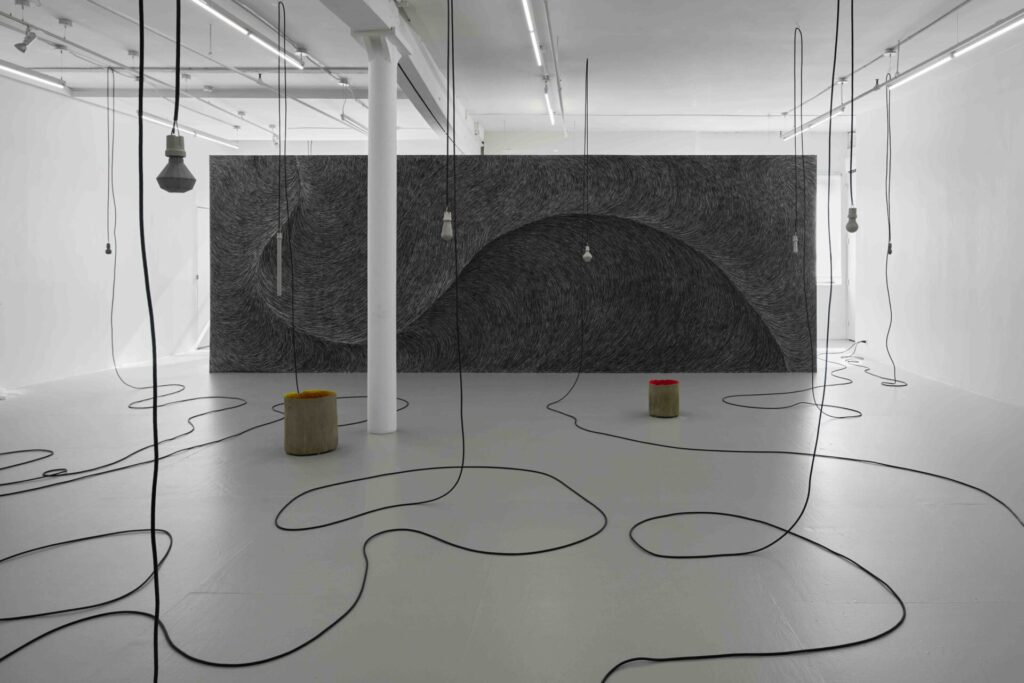
Light Field marks the first presentation at Instituto de Visión NY by Brazilian artist Marlon de Azambuja, who lives and works in Paris. His practice is deeply rooted in installation as a space for inquiry, with a sustained engagement with architecture—particularly the formal and utopian principles of modernism—that has informed his thinking about space, perception, and the conditions through which an artwork is encountered.
The presentation brings together works from different moments of Azambuja’s practice al